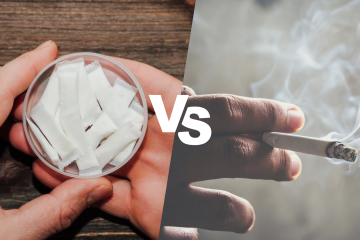


A smarter, lower‑impact way to manage cravings—switch now with Pouchguy
At a glance: which option has the least health impact?
If you currently smoke or vape and want a cleaner, simpler way to manage cravings, here’s what today’s evidence indicates:
- Cigarettes — Highest harm: burning creates smoke with thousands of toxic chemicals and is responsible for millions of deaths worldwide each year.
- Vapes (e‑cigarettes) — Lower than smoking, not risk‑free: by removing combustion, vapes reduce exposure to many toxicants; high‑quality reviews show they can help adult smokers quit more effectively than traditional aids.
- Pouches — Promising low‑exposure profile, but long‑term data is limited: smoke‑free; early clinical studies show substantially reduced biomarkers of exposure when smokers switch fully, though ongoing research is needed.
Important: No product is “safe.” The goal is to move down the risk ladder and, if you choose, taper off entirely.
What changes when you remove smoke—and devices
- No combustion: Pouches deliver satisfaction orally, avoiding toxins created by burning.
- No inhalation: Unlike smoking or vaping, there’s no aerosol to breathe into the lungs.
- No hardware: No batteries, coils, or refills—just a discreet pouch with predictable strength.
Pros & cons at a glance
| Product | Pros | Cons |
|---|---|---|
| Cigarettes | • Quick delivery • No device to maintain | • Highest health harm from smoke and toxicants • Second‑hand smoke affects others • Smell, ash, and stains • Increasing social and legal restrictions • High long‑term cost |
| Vapes (e‑cigarettes) | • Lower toxicant exposure than smoking • Effective for quitting for many adults • Wide flavour and strength range | • Not risk‑free; long‑term effects still under study • Requires device, charging, upkeep • Youth‑appeal concerns leading to stricter rules in many markets |
| Pouches | • Smoke‑free, device‑free, discreet • No odour or vapour • Early studies show reduced biomarkers when fully switching from cigarettes • Consistent dosing across strengths | • Not risk‑free; long‑term data limited • Possible gum or mouth irritation for some users • Keep away from children—ingestions are a poisoning risk • Legal status varies by country |
Why many adults choose pouches over smoking or vaping
- Lower‑impact profile vs. smoking Early clinical and toxicological work finds that when smokers fully switch to pouches, biomarkers of exposure to related toxicants drop—often approaching levels seen in abstinence over short study periods. That’s consistent with removing smoke entirely.
- Simplicity & discretion No cloud, no device, no lingering smell. For many, that makes daily routines—office hours, commutes, travel—easier.
- Control over intake Clearly labelled strengths let you match your current needs and, if your goal is to reduce, step down methodically.
- A pathway off cigarettes If you’re still smoking, the strongest evidence for quitting supports vapes; however, some adults use pouches to move away from combustibles when vaping isn’t acceptable or convenient.
Make the switch, the smart way (if legal where you are)
Pick the right strength. Choose a pouch strength that comfortably replaces your current intake—too little can trigger cravings; too much can cause nausea or dizziness.
Switch fully, not halfway. Dual‑use keeps exposure from smoking high. Commit to zero cigarettes once you find the right pouch routine. Early trials show the biggest exposure reduction when the switch is complete.
Mind your mouth. Rotate placement (left/right, upper lip), hydrate, and maintain oral hygiene. If irritation persists, step down strength or pause.
Store safely. Treat pouches like any product—child‑resistant storage is a must. Pediatric poison‑control data show a sharp rise in accidental ingestions among children under six.
FAQs
Are pouches “safe”? No product is risk‑free. Compared with smoking, pouches remove combustion and reduce exposure to many harmful chemicals, but long‑term effects are still being studied.
Which option best supports quitting altogether? Among alternatives, e‑cigarettes have the strongest evidence for helping adult smokers stop, compared with traditional aids and no support. If your goal is complete cessation, combine any product choice with behavioural support.
What about second‑hand impact? Pouches produce no smoke and no exhaled aerosol, which reduces exposure to bystanders compared with smoking and vaping. (Always dispose of used pouches responsibly.)
The bottom line
If you smoke today, moving away from combustion is the single biggest step you can take to reduce health impact. Vaping is substantially lower‑risk than smoking and proven to help many adults quit. Pouches remove smoke and inhalation, offering a discreet, device‑free option with a promising evidence base.